

The Peruvian Amazon brings together a diversity of flavours that is difficult to find anywhere else. Some fruits grow beside rivers, others come from palms or agroforestry plots, and many are part of everyday food in Loreto, Ucayali, San Martín, Amazonas and Madre de Dios. This guide introduces 20 fruits of the Peruvian Amazon, how to recognise them, what they taste like and how they are commonly eaten.
Not all of them originated exclusively in Peru, but all are cultivated, gathered or eaten within its Amazonian territory. Availability varies by city and season, so visiting a local market remains one of the best ways to discover them.
1. Aguaje (Mauritia flexuosa)

Aguaje is one of the most representative fruits of Loreto and other floodplain areas of the Amazon. Its reddish skin is covered with small scales and protects a soft, mildly sweet layer of orange pulp. In Iquitos markets it is eaten fresh or used in drinks, ice cream and the popular beverage known as aguajina. Choosing sustainably harvested products helps protect female palms, which are the fruit-bearing trees.
2. Camu camu (Myrciaria dubia)

Camu camu grows naturally along riverbanks and in areas that remain flooded for part of the year. It is small and round, changing from green to purplish red as it ripens. Its flavour is notably tart, so it is commonly made into juice, nectar, jam, ice cream or frozen pulp. Its high vitamin C content accounts for much of its popularity, although it should be enjoyed as food rather than treated as a miraculous medicine.
3. Cocona (Solanum sessiliflorum)

Cocona may be round or oval and can ripen to yellow, orange or reddish tones. Its pulp is juicy, fragrant and pleasantly acidic, with a texture somewhat reminiscent of tomato. Amazonian cooks use it in drinks, jams and salads, but its best-known preparation is cocona sauce with ají charapita chilli, a common accompaniment to fish, cassava and regional dishes.
4. Cupuaçu (Theobroma grandiflorum)
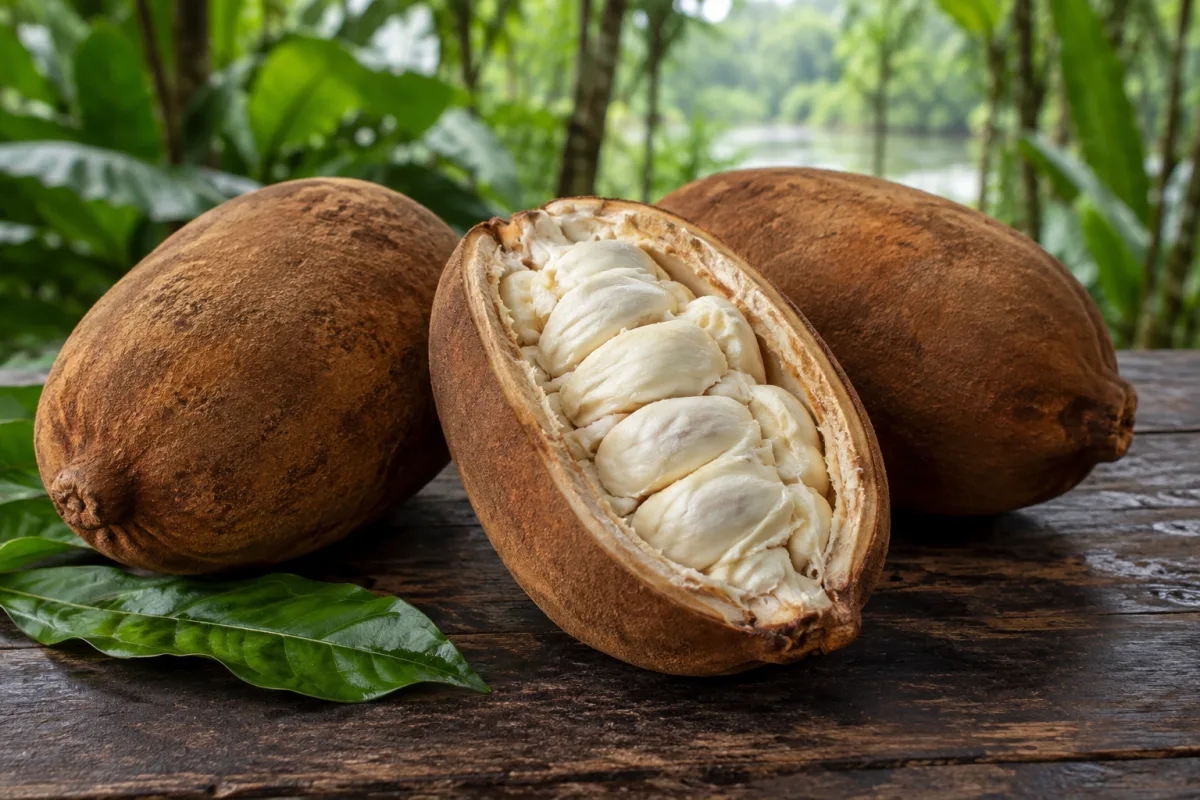
A close relative of cacao, cupuaçu has a velvety brown shell enclosing seeds wrapped in highly aromatic white pulp. Its flavour combines acidity and sweetness with notes reminiscent of pineapple, cacao and passion fruit. It is used in nectars, desserts, jams and chocolate products; its seeds can also be processed into a chocolate-like product and a fat used in food and cosmetics.
5. Arazá (Eugenia stipitata)

Ripe arazá is yellow, thin-skinned and intensely fragrant. Its pronounced acidity means it is rarely eaten on its own, but it works particularly well in drinks, nectars, ice cream, yoghurt and jam. The fruit is delicate and softens quickly after harvest, so it is most often found near producing areas or sold as pulp. Its vivid tropical aroma is one of its most memorable qualities.
6. Ungurahui (Oenocarpus bataua)

Ungurahui is the dark fruit of an Amazonian palm and grows in abundant clusters. It has a thin, oily layer of mildly flavoured pulp. Traditionally the fruits are soaked and mashed to prepare a thick, nutritious, purple-toned drink; they may also be used in ice cream and other products. An oil valued locally is extracted from the pulp when harvesting respects the forest and the palm’s natural cycle.
7. Star apple (Chrysophyllum cainito)

Star apple generally has smooth green or purple skin. When cut across the middle, its seeds create a star-like pattern. The white or translucent pulp is sweet, soft and slightly milky. It is best eaten fresh with a spoon, avoiding the skin because it can be bitter and sticky. This refreshing seasonal fruit is commonly seen in Amazonian markets.
8. Ice-cream bean (Inga edulis)
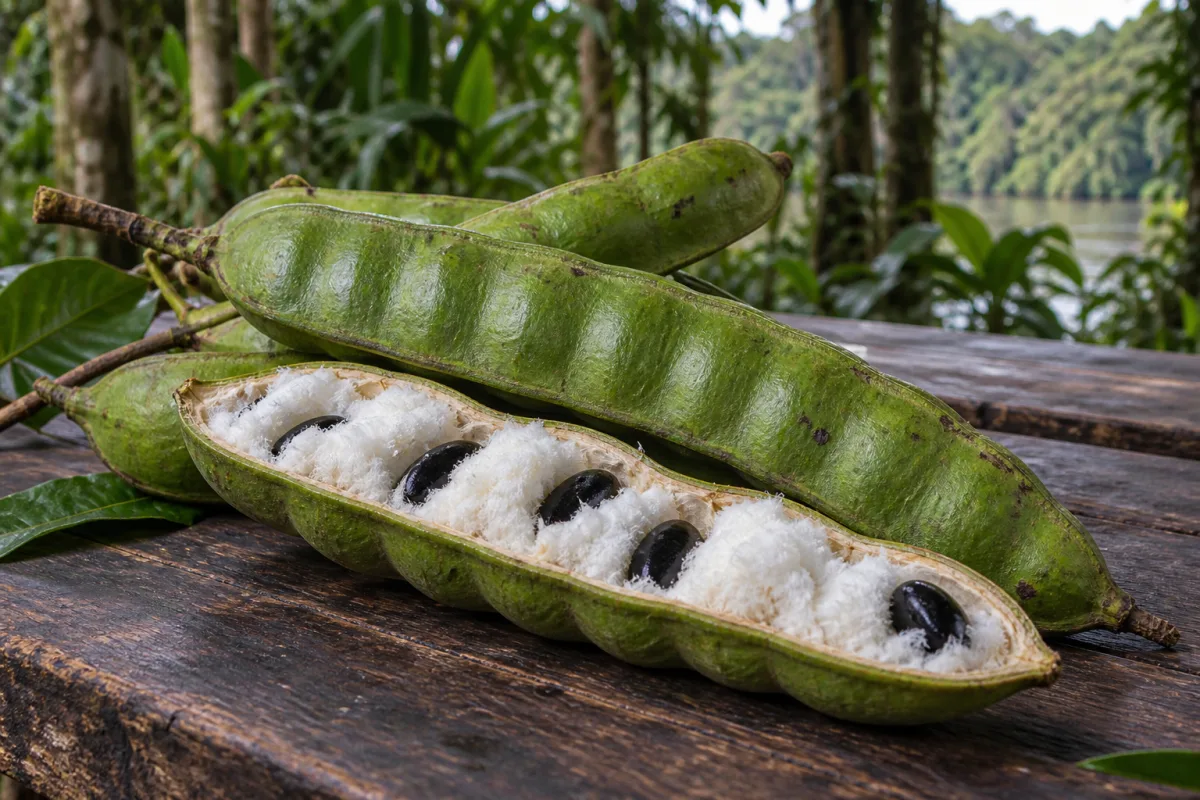
Ice-cream bean grows inside green pods that can become remarkably long. Opening one reveals black seeds wrapped in sweet, cottony white pulp that is eaten directly. Its delicate flavour inspired the English name “ice-cream bean”. Besides providing food and shade on small farms, Inga trees help add nitrogen to the soil and are common in agroforestry systems.
9. Macambo (Theobroma bicolor)

Macambo belongs to the same genus as cacao. Its large, ridged fruit contains numerous flat seeds surrounded by pale pulp. In the Peruvian Amazon people eat the pulp and, especially, roast the seeds as a snack or add them to bars, sweets and savoury dishes. Roasted macambo seeds combine nutty and cacao-like notes and can develop a pleasantly crisp texture.
10. Peach palm fruit (Bactris gasipaes)
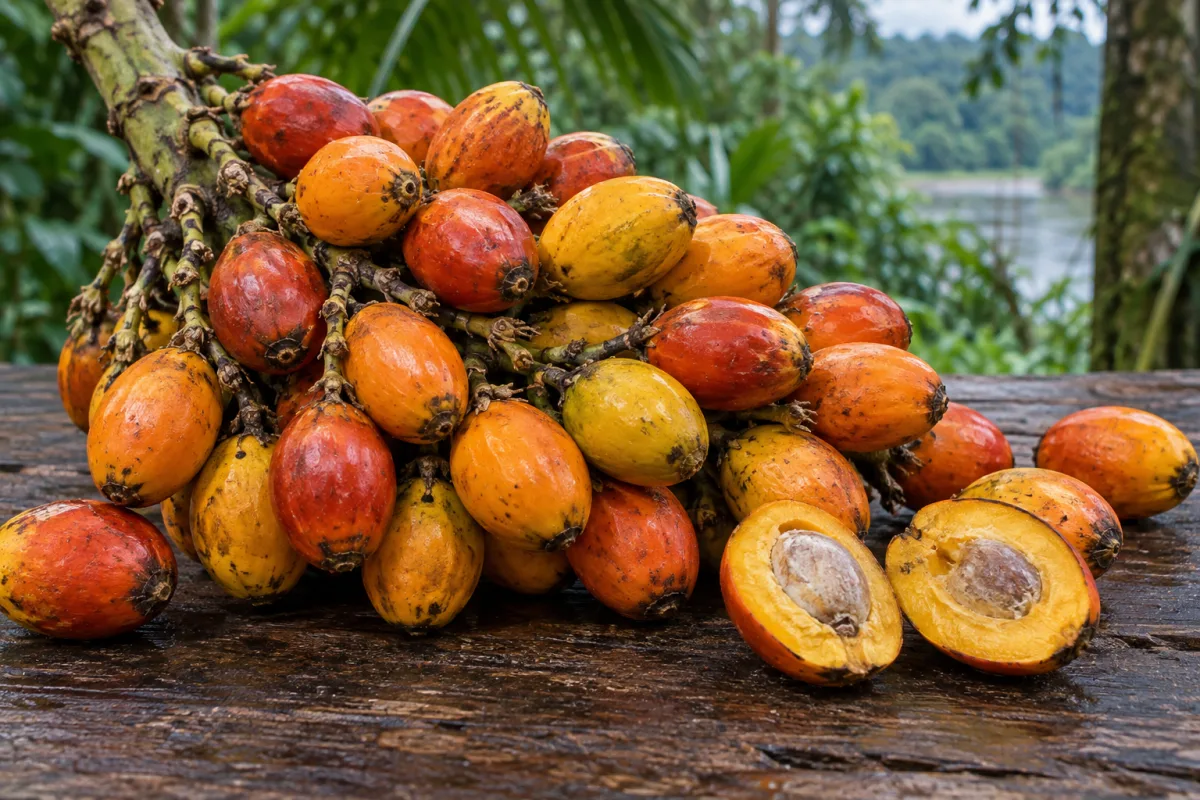
Peach palm fruit grows in clusters of yellow, orange or red fruits. Unlike many fruits, it is not normally eaten raw: it is boiled in salted water until tender, then peeled and served on its own, with honey or butter, or alongside other foods. Its firm, starchy texture, mild flavour and energy content have made it an important food for Amazonian communities over many generations.
11. Jagua (Genipa americana)

Jagua is round, greyish green before ripening and brown when fully mature. Its ripe aromatic pulp is used in drinks, sweets, syrups and fermented beverages. The unripe fruit produces juice that oxidises to a dark blue or black colour, traditionally used as body dye by Amazonian peoples. This cultural role is just as significant as its culinary use.
12. Umari (Poraqueiba sericea)

Umari is an oval fruit whose skin may be yellow, orange, green or very dark depending on the variety. Beneath it lies a layer of aromatic, oily pulp around a large seed. It is eaten fresh and often paired with farinha or cassava bread, a combination closely associated with everyday food in Loreto. Its creamy consistency sometimes draws comparisons with avocado.
13. Amazon tree grape (Pourouma cecropiifolia)

Amazon tree grape should not be confused with the Andean goldenberry. It grows in clusters and turns dark purple when ripe, resembling a grape. The skin protects translucent, juicy and sweet pulp surrounding a single seed. It is eaten fresh and may also be made into juice, artisanal wine or jam. It is among the native fruit species highlighted in IIAP research.
14. Cashew apple (Anacardium occidentale)

In the Peruvian Amazon the fleshy cashew apple is known as casho. It may be yellow or red, is exceptionally juicy and tastes sweet with an astringent finish. It is eaten fresh or used in drinks, jam and fermented beverages. The familiar cashew nut grows externally at the bottom of the fruit and requires careful processing before it is safe to eat; it should never be treated as a ready-to-eat raw seed.
15. Amazonian açaí (Euterpe precatoria)

Peruvian açaí mainly comes from Euterpe precatoria, a palm different from the species most widely cultivated in Brazil. Its small purple fruits have only a thin layer of pulp around a large seed. After soaking, the pulp is separated to prepare drinks and creams with an earthy, subtly fruity taste. Look for suppliers that harvest fruit without cutting down palms or damaging wild populations.
16. Yellow mombin (Spondias mombin)

Yellow mombin is small, oval and golden when ripe. Its pulp is juicy and fibrous, with a sweet-tart flavour and intense aroma that work well in drinks, ice cream, jam and frozen treats. The stone occupies much of the fruit, so the pulp is generally pressed or blended and then strained. Elsewhere in the Americas it is also known as jobo or cajá.
17. Soursop (Annona muricata)

Soursop is large and green with soft curved spines. Inside are segments of creamy, sweet-tart white pulp surrounding black seeds that are not eaten. The fruit is used in juices, smoothies, ice cream, mousse and other desserts. Although grown throughout the tropics and not exclusive to Peru, it is a familiar part of markets and kitchens across the Peruvian Amazon.
18. Star fruit (Averrhoa carambola)

Star fruit is immediately recognisable by its five longitudinal ridges: every cross-section forms a star. Ripe fruit is yellow, crisp and juicy, ranging from notably tart to sweet. It is eaten fresh and used in drinks, salads, preserves and garnishes. The species originated in Asia but is now well adapted to the warm, humid conditions of the Peruvian Amazon.
19. Yellow dragon fruit (Selenicereus megalanthus)
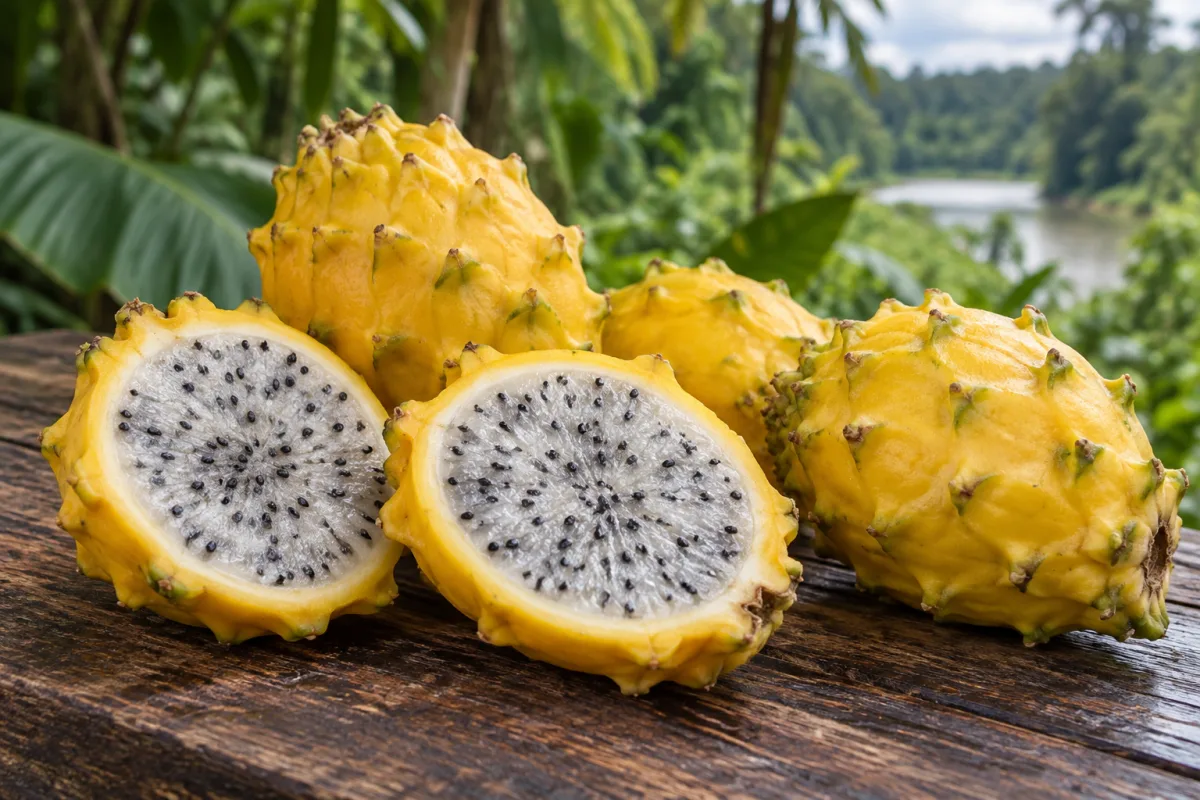
Yellow dragon fruit has bright skin with small raised bracts and white flesh packed with edible black seeds. It is sweet, aromatic and very juicy. The fruit is eaten fresh with a spoon or added to fruit salads, smoothies and desserts. In recent years cultivation has expanded in Peru’s high jungle and other warm areas because of growing commercial interest in its flavour and appearance.
20. Brazil nut (Bertholletia excelsa)

Brazil nuts develop inside a hard, woody, spherical fruit that falls from the tree when mature. Several triangular seeds fit inside; removing each seed’s shell reveals the edible kernel. In Madre de Dios, Brazil nut gathering is an important economic activity closely tied to keeping the forest standing. The nuts are eaten raw or roasted and used in chocolate, snack bars, granola and oils.
Where to try Amazonian fruits in Peru
In Iquitos, Belén Market and neighbourhood markets sell fresh fruit, drinks and ice cream. Tarapoto, Pucallpa and Puerto Maldonado are also good starting points. Ask what is in season and choose vendors that handle food hygienically. For wild species and palm fruits, favour initiatives that work with sustainable harvesting and local communities.
Frequently asked questions about Peruvian Amazon fruits
What is Peru’s best-known Amazonian fruit?
Aguaje and camu camu are among the best known. Aguaje has an enormous cultural presence in Loreto, while camu camu is commercially prominent because of its tart flavour and vitamin C content.
Can all these fruits be eaten raw?
No. Peach palm fruit is normally cooked before eating and Brazil nuts must be removed from their hard shells. Soursop seeds are not eaten, and the nut attached to a cashew apple requires specialist processing.
Where are they easiest to find?
The widest selection appears in markets in Amazonian cities such as Iquitos, Pucallpa, Tarapoto and Puerto Maldonado. In Lima, frozen pulp, drinks and processed products are more common.
When are they available?
Each species has its own season, and harvests also vary with rainfall and region. The selection in a market may look very different from one month to the next.